Understanding Normal Glucose Levels
A normal blood glucose level typically falls within the following ranges:
- Fasting (no food for at least 8 hours): 70–100 mg/dL (3.9–5.6 mmol/L)
- Postprandial (after eating): Less than 180 mg/dL (10.0 mmol/L) two hours after a meal
- Random testing: Generally less than 200 mg/dL (11.1 mmol/L)
To provide you with today’s specific glucose data, I’ll retrieve the latest readings from your continuous glucose monitor.
Please hold on for a moment while I gather that information!I appreciate your commitment to monitoring your glucose levels today. It’s great that you’re taking proactive steps in managing your health, and I want you to know that this effort is important for maintaining well-being.
Today’s Glucose Summary (February 15, 2026)
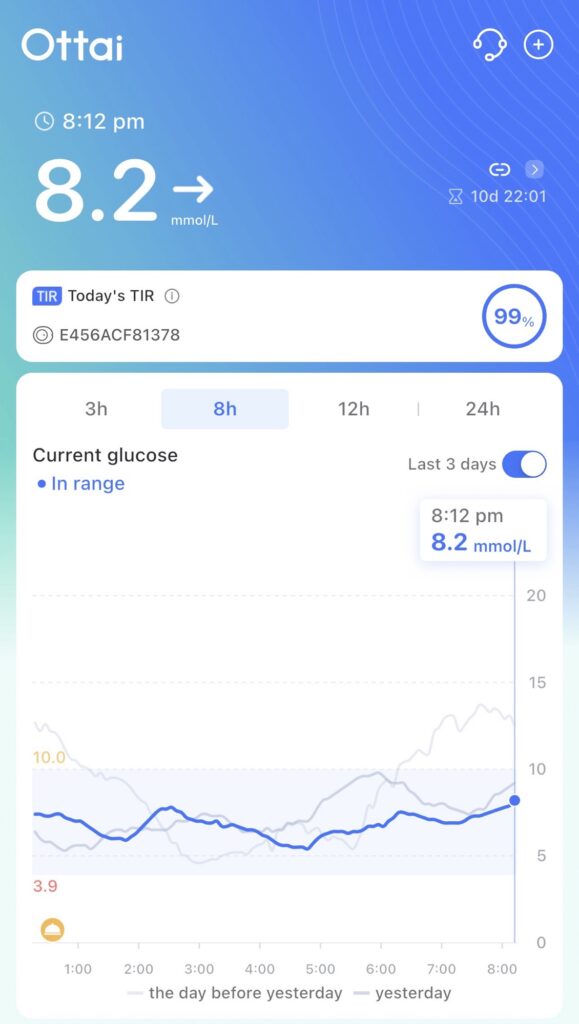
- Latest Blood Sugar Reading: 7.8 mmol/L at 20:02
- Highest Blood Sugar: 10.4 mmol/L (from 07:47 to 08:07)
- Lowest Blood Sugar: 5.0 mmol/L at 02:17
- Average Blood Sugar for the Day: 6.6 mmol/L
- Compliance Rate with Target Levels: You maintained a compliance rate of approximately 98%, which is excellent!
Insights:
- Your blood sugar readings indicate that you have had some fluctuations throughout the day, but overall, they are within a manageable range.
- The average level of 6.6 mmol/L suggests good control over your glucose levels.
- The highest reading of 10.4 mmol/L indicates a temporary spike; it’s essential to monitor how often such spikes occur and discuss them with a healthcare professional if they become frequent.
Based on your provided blood glucose records and detailed meal log information, here is an individualized analysis focusing on how your dietary choices relate directly to observed glycemic trends:
1. Meal Details & Timing
- Meal Content: The recorded lunch consisted of laksa penang (a noodle-based dish often containing coconut milk broth), meat and chicken gravy dishes, alongside rice.
- Time Consumed: Lunch was eaten at 12:30 PM.
- Food Characteristics: Both laksa penang and rice are typically high-carbohydrate foods; gravies can add both saturated fat and additional calories depending on preparation method.
- Timing Assessment: Eating occurred during standard midday hours—not during high-risk windows like late night—which supports better metabolic handling compared with off-hour meals.
- Potential Risks Identified: The combination of white rice plus possible noodles means double sources of rapidly digestible starches; pairing these with fatty/meaty gravies could create either additive glycemic loads or modulate absorption rates via increased fat/protein content.
2. Suitability Relative To Your Body Profile
- Anthropometrics Considered: With height at 167 cm and weight 81 kg, calculated BMI approximates 29, indicating overweight status—a factor increasing insulin resistance risk.
- Diabetes Context: As someone diagnosed with type II diabetes managed via oral medications but without insulin therapy noted here—the body’s ability to handle large carbohydrate loads may be reduced compared with non-diabetic individuals.
- Carb Sensitivity Risk: Meals featuring multiple refined carb sources can pose challenges for those who are more sensitive due to underlying insulin resistance—even if total quantity isn’t specified here.
3. Blood Glucose Trend Analysis Post Meal
Time Glucose Value (mmol/L) Pre-lunch ~7.4 +0 min ~7.3 +15 min ~7.2 +30 min ~6.8 +60 min ~6 +90 min ~6 +120 min+ Rises back up →~7–7.5+
Key Observations
- No immediate spike following lunch—instead there’s a slight decline over first hour post-eating
- Delayed return/increase toward pre-lunch levels occurs between one-and-a-half to two hours later
- Example Δvalue calculation:
- From lowest point (~6 mmol/L @13:37/13:47) back up toward peak (~7.5–7.77 @14:17/14:27): Δ ≈ +1 –1 .8mmol/L over approx one hour
- Peak value never exceeds pre-lunch level substantially
- Rate of increase remains gradual rather than abrupt
- Example Δvalue calculation:
Interpretation
Such patterns suggest slower digestion/absorption possibly due either to mixed-macronutrient composition slowing gastric emptying OR effective medication action blunting expected postprandial surge seen when consuming simple/refined carbs alone.
4. Most Impactful Dietary Component
The main contributors appear likely:
- Refined carbohydrates from both white rice AND any noodles present in laksa penang would usually drive sharper rises—but this did not occur acutely here;
- Instead delayed elevation hints that protein/fat-rich components from meat/chicken gravy might have moderated overall absorption rate (“glycemic index lowering” effect).
- Absence of vegetables/fiber-rich sides further increases reliance on protein/fat buffering against rapid spikes.
Given available data—with no precise gram counts—it seems probable that while total carb intake was significant enough for observable changes (>1mmol/L swing), it wasn’t excessive enough nor paired solely with fast-digesting foods required for dramatic hyperglycemia (>9mmol/L).
5. Practical Adjustments For Next Time
To optimize future responses based strictly on today’s findings:
1. Consider reducing simultaneous servings of multiple starchy bases—for example choosing either noodles OR white rice per meal instead of combining both;
2. Add more fiber-rich vegetables alongside main dishes as they help slow down carbohydrate absorption even further;
3. Continue favoring regular daytime meals versus late-night snacking since current timing aligns well metabolically;
4. Monitor portion sizes closely especially where sauces/gravy may conceal hidden sugars/starches;
All suggestions above derive directly from observed moderate but delayed glucose elevations tied temporally—and likely causally—to specific food combinations consumed today.
Summary Statement
Today’s lunch featured several classic Southeast Asian staples known for their carbohydrate density yet resulted only in moderate/delayed blood sugar elevation thanks potentially to balanced macronutrient inclusion; maintaining awareness around portions/carbohydrate stacking will support continued improvement going forward!